By Sue Palmer, The Horse Physio
Prefer to listen? Click on the video above. If you enjoy reading, keep scrolling. You can support my work by buying me a coffee, joining the Healthy Humans, Happy Horses online learning hub, or signing up to my newsletter. Remember to follow, like, and share on Facebook, Instagram and YouTube. Please note that this may contain affiliate links. Thank you – your support means so much!
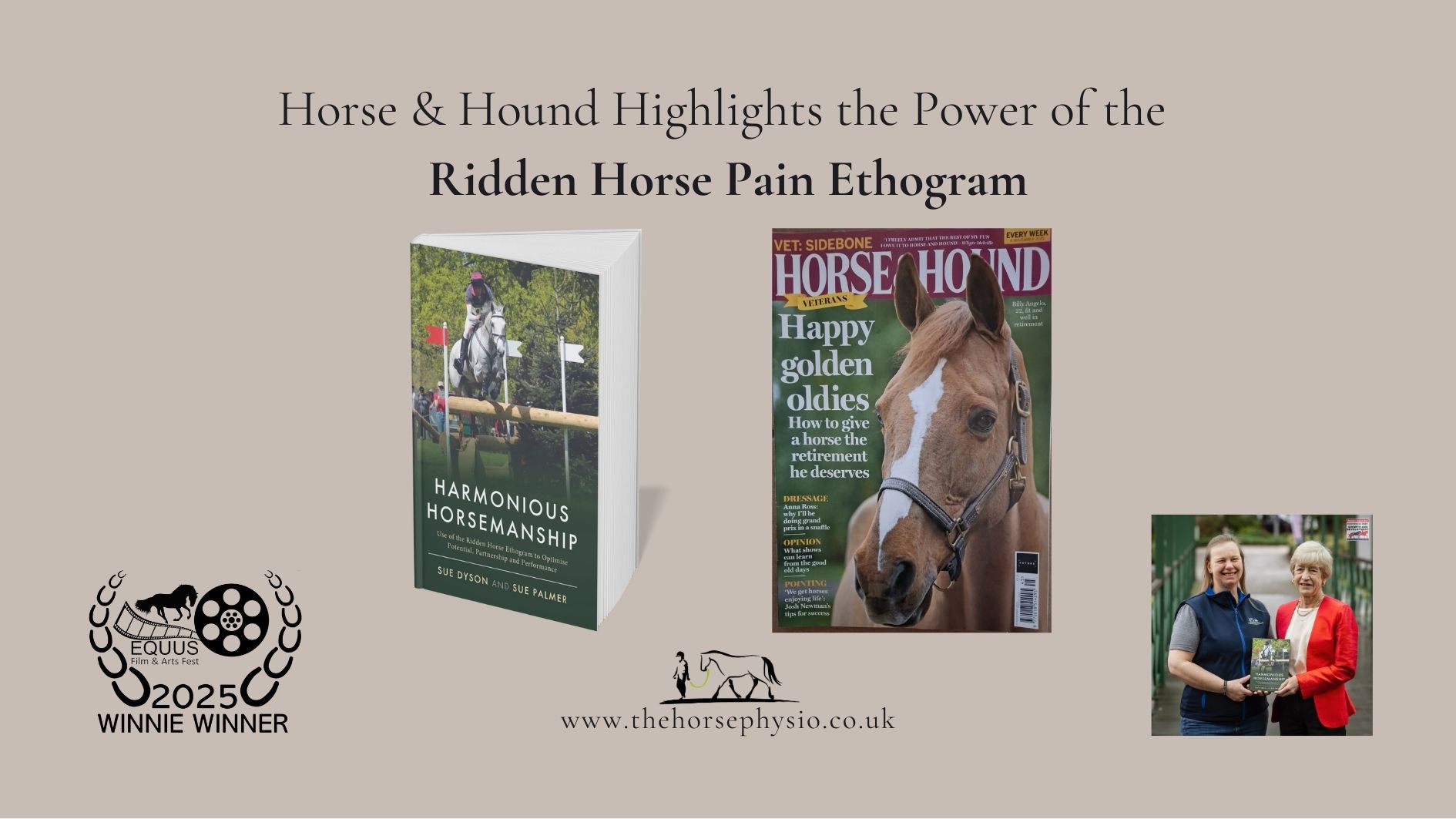
In the 6th November 2025 edition of Horse & Hound, within an article celebrating older horses, vet Ben Chilvers MRCVS described the Ridden Horse Pain Ethogram (RHpE) as ‘one of the most significant advances in the past decade… recognises 24 subtle behaviours linked to discomfort. “This tool allows much earlier recognition of discomfort, often before lameness is obvious”, says Ben’
For those of us who work with horses every day, this acknowledgement felt both timely and deserved. The RHpE has transformed the way we recognise pain — not through guesswork, not through tradition, but through trusted, robust, peer-reviewed science.
And it is that scientific foundation that makes the RHpE such a powerful tool.
Why the RHpE Matters
Horses express discomfort long before lameness is visible. Historically, many of these expressions have been explained away as training issues or personality quirks. The RHpE changes that. It gives us a validated, evidence-based way to interpret what horses have been trying to tell us for decades.
The RHpE consists of 24 precisely defined behaviours, each described in exact wording because that wording is tied directly to the research. The science is clear:
when 8 or more of those 24 behaviours are present during ridden work, the horse is likely experiencing musculoskeletal pain.
There is nuance, of course — as with all things equine.
Some painful horses score fewer than eight behaviours; some horses without pain may occasionally show one or two. But the strength of the RHpE lies in recognising the pattern, not relying on any single sign in isolation.
It is this careful, measured approach that has made the RHpE a trusted tool used by vets, physiotherapists, coaches, and researchers worldwide.
The Woman Behind the Science
To understand the significance of the RHpE, it helps to understand the woman behind it.
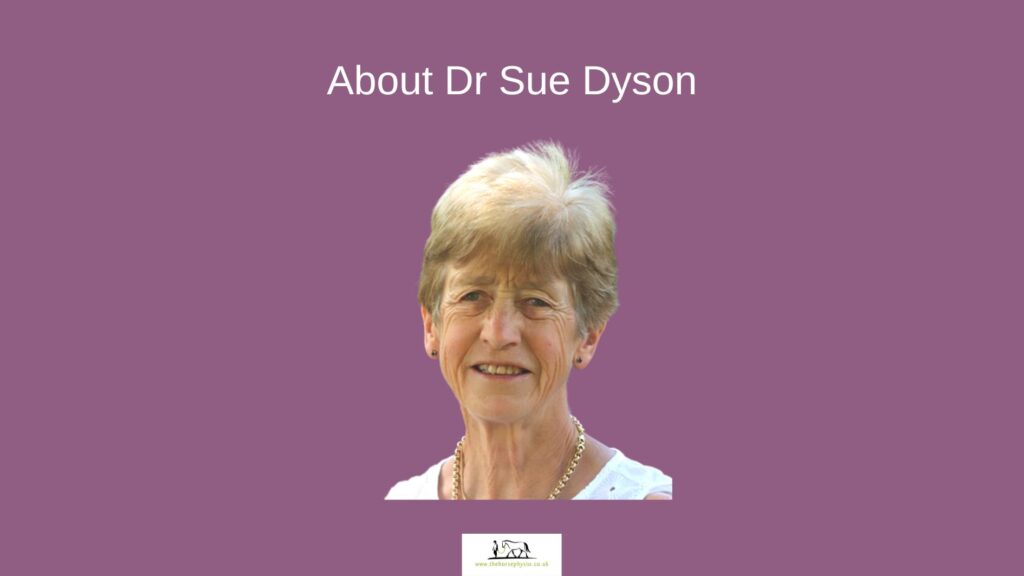
Dr Sue Dyson is internationally regarded as one of the most influential equine orthopaedic clinicians of our time. Formerly Head of Clinical Orthopaedics at the Animal Health Trust in Newmarket, she has:
Her work has shaped modern equine veterinary practice globally.
But the RHpE stands apart.
It is the culmination of decades spent listening to horses and asking — again and again — “What are you trying to tell us?”
The RHpE answers that question with clarity and rigour, giving owners and professionals alike a way to recognise discomfort earlier, kinder, and more accurately than ever before.
How Our Collaboration Began
When the first RHpE paper was published, I read it with a sense of recognition. As a Chartered Physiotherapist treating both horses and humans — and already the author of two published books, Horse Massage for Horse Owners and Understanding Horse Performance: Brain, Pain or Training? — I could see instantly how transformative this tool could be.
The RHpE brought scientific structure to something I had witnessed countless times in practice: behaviour and pain are inseparable.
So I reached out to Sue Dyson.
Not to ask a question, but to start a conversation.
From the very first exchange, it was clear that we shared a mutual passion: bringing this trusted scientific tool to the equestrian public in a way that was accessible, understandable, and genuinely useful. We both believed that owners deserved clear, compassionate guidance — and that horses deserved to be heard.
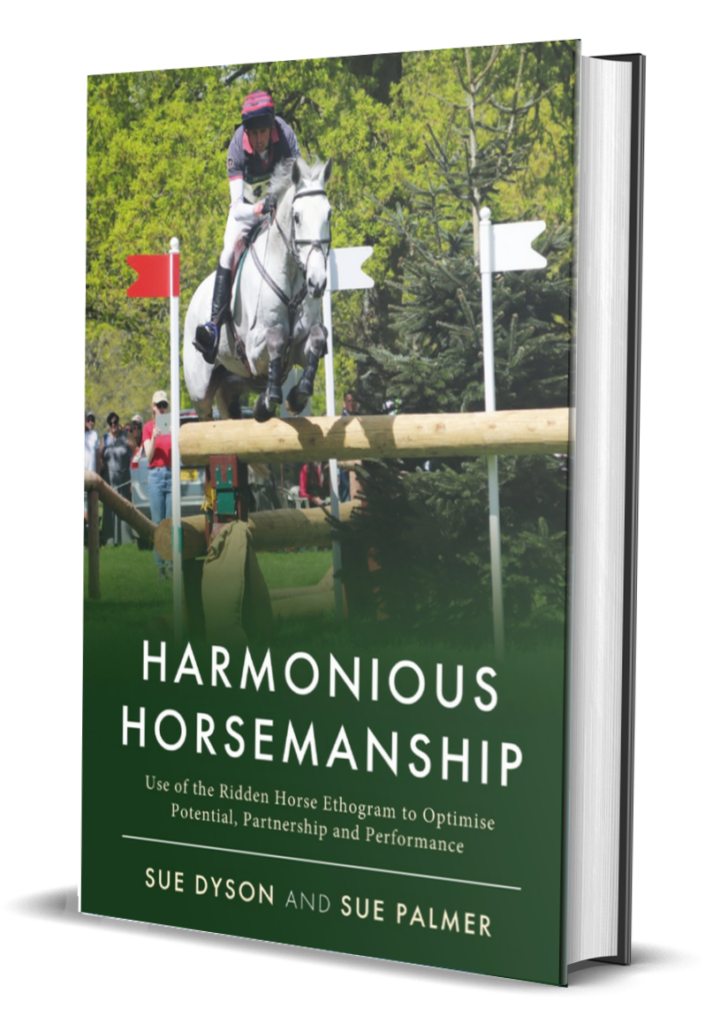
That shared passion grew into a collaboration, and eventually into our book Harmonious Horsemanship, written to help you use the RHpE confidently with your own horse.
This book is not about turning riders into vets.
It is about empowering you to recognise when something isn’t quite right — and to seek help sooner.
Because early recognition is not just good welfare.
It prevents suffering.
It protects long-term soundness.
It deepens the partnership between horse and human.
Why Exact Wording Matters
When referring to RHpE behaviours such as:
…it is essential that we quote them exactly as they appear in the research.
This protects the scientific validity of the tool.
It ensures the RHpE remains trusted.
It respects the meticulous work that underpins it.
And most importantly, it safeguards the accuracy of what we pass on to owners, riders, and professionals.
A More Compassionate Future
I believe it’s Sue Dyson’s hope — as it is mine — that the Ridden Horse Pain Ethogram becomes something every rider knows about, not as a diagnostic tool, but as a way of understanding their horse more clearly and compassionately.
Because when we recognise discomfort early, we do better by our horses.
We strengthen our partnership.
We make kinder choices.
We create more harmonious relationships.
And ultimately, we give our horses what they have always given us: their best.
If you’d like thoughtful, evidence-informed reflections like this each week, and 20% off our book Harmonious Horsemanship, you’re warmly invited to join my newsletter here.
Understanding our horses is the first step towards helping them thrive — at any age.
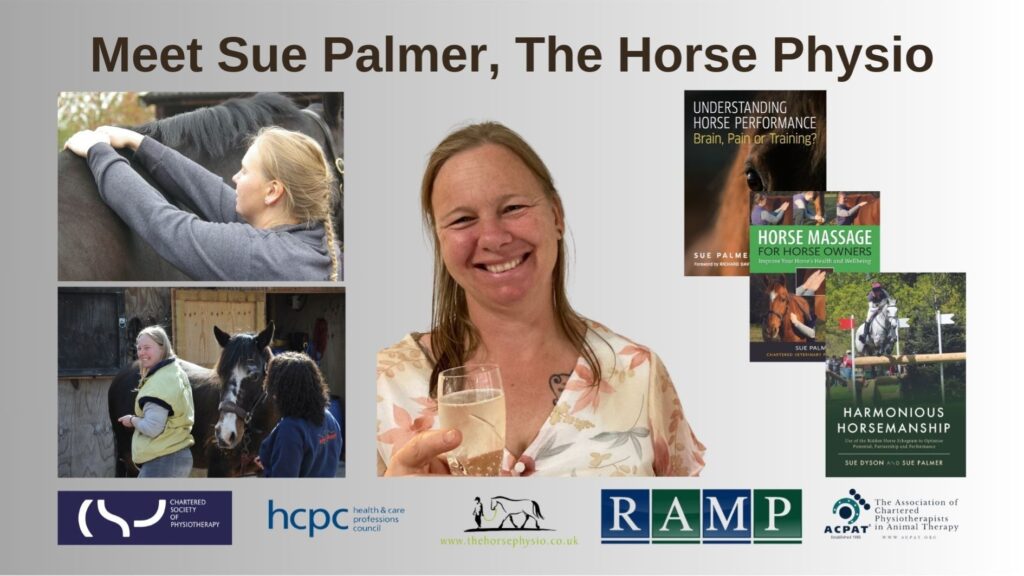
🌟 About Sue Palmer, The Horse Physio
Sue Palmer MCSP is an award-winning Chartered Physiotherapist, educator, and author. Known for her compassionate, evidence-informed approach, Sue specialises in human health and equine well-being, with a focus on the links between pain and behaviour in horses. She is registered with the RAMP, ACPAT, IHA, CSP, and the HCPC.
📚 Books include:
Harmonious Horsemanship (with Dr Sue Dyson)
Understanding Horse Performance: Brain, Pain or Training?
Horse Massage for Horse Owners
Drawn to Horses (with illustrations by Sarah Brown)
🌐 Learn more at www.thehorsephysio.co.uk